The Ultimate Guide to Thailand’s Green Season: A Travel Experience Destination for Indian Travelers
Quick Answer: Green Season (May–September) in Northern Thailand leads to overgrown vistas, significantly reduced prices, and virtually empty walkways — it’s a great time for Indian visitors to visit Chiang Mai, hike the highlands, and experience ethical elephant sanctuaries. Sure, the monsoon that devastates Thailand’s southern beaches barely makes it to the North.
Between November and February each year, millions of Indian travellers search to plan a trip to Thailand. Peak season. Crowded temples. Inflated hotel prices. Expensive flights. And in the back of everyone’s mind, there is one firm belief: Thailand during the monsoon season is a bad idea.
That conviction is wrong.
Not slightly wrong. Completely wrong — at least for Northern Thailand.
Phuket and Krabi may take a beating from the Andaman monsoon during May to October, but Chiang Mai and its highland surroundings experience an altogether different weather system. The rain here is gentler and more predictable, and most importantly, it turns the landscape into something that a little sunshine in the dry season simply cannot provide.
Think emerald-hued terraces carefully sculpted into the hills, mist-covered mountain walks, massive roaring waterfalls, and silence so complete you can hear elephants bathing in the river.
This is something that most travel guides created for an Indian audience gloss over completely. They follow the regular route of Bangkok, Phuket, Krabi, and then back home. Northern Thailand during the monsoon gets a passing mention, and everybody moves on.
This post argues something else.
Especially if you’re an Indian traveler who prefers authentic experiences over crowded Instagram hotspots, the Green Season in Chiang Mai could quite possibly be the best travel decision you make all year.
Key Takeaways: Everything You Need to Know
What is Green Season in Northern Thailand?
The Green Season in Northern Thailand generally happens between May and September, with the lushest period usually falling around July and August. It is the local term for what most people would simply call the monsoon season, although that description doesn't quite fit here.
Whereas the southwest monsoon batters Thailand’s Andaman Coast, Chiang Mai and the northern highlands are influenced by an entirely different weather system.
Instead of continuous rain throughout the day, rainfall usually comes in short bursts, often during the late afternoon or evening. Most mornings begin bright and clear. Clouds slowly gather around noon. Rain may arrive for an hour around 4 PM before clearing again by sunset.
This distinction is especially important for Indian travelers who associate monsoons with the relentless rains of Mumbai or Kerala.
Northern Thailand’s Green Season isn't like that.
It is gentler, more forgiving, and allows visitors to enjoy sightseeing, hiking, cafés, temples, and outdoor experiences throughout most of the day.
Why Northern Thailand is Different During the Monsoon
Thailand has multiple geographical realities, and its weather systems vary dramatically from region to region.
The southern islands—Phuket, Koh Lanta, and Phi Phi—sit along the Andaman Sea and receive the full force of the southwest monsoon between May and October.
During this period:
Beaches experience rough seas.
Boat transfers are frequently cancelled.
Underwater visibility drops significantly.
Heavy rain becomes common.
Northern Thailand is completely different.
Mountain ranges and elevated terrain naturally shield Chiang Mai from the harshest effects of the southwest monsoon.
Located roughly 300 meters above sea level, Chiang Mai receives most of its annual rainfall between June and August, but those showers are generally spread throughout the season instead of arriving in long, uninterrupted downpours.
The practical takeaway is simple.
If you visit Chiang Mai during the Green Season with a flexible itinerary and are willing to work around occasional afternoon showers, you'll still be able to enjoy almost everything outdoors.
What Chiang Mai Looks Like During the Green Season
Dry-season Chiang Mai is beautiful in the way many famous destinations are—clean, predictable, and busy.
Green Season Chiang Mai feels entirely different.
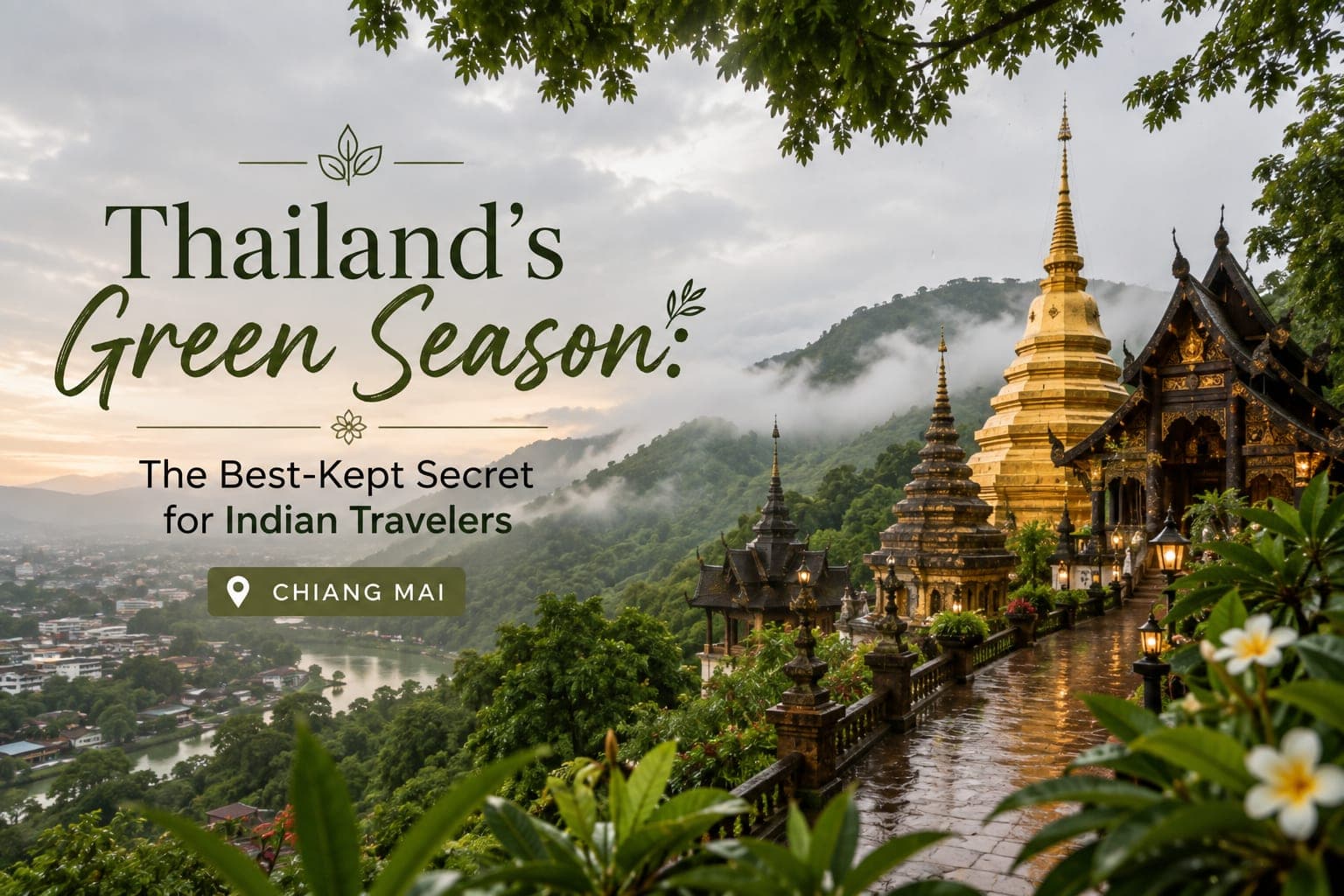
The rice fields surrounding the city become an almost electric shade of green.
The Mae Ping River flows high and fast.
Waterfalls such as Huay Kaew, Mae Sa, and the famous Sticky Waterfall transform from small streams into powerful white curtains of water that completely change the landscape.
The forests around Doi Inthanon, Thailand’s highest mountain, and Doi Suthep become lush, vibrant, and alive in ways impossible during the dry months.
Early mornings often begin with mist rolling gently across the mountains.
Leaves sparkle with dew.
Soft, diffused light replaces the harsh sunshine of peak season, making the scenery especially rewarding for photographers.
Meanwhile, Chiang Mai itself continues operating exactly as it always does.
The Old City remains lively.
The Saturday and Sunday Walking Streets continue welcoming visitors.
The cafés and art galleries around Nimmanhaemin stay open.
Restaurants continue serving guests.
Tuk-tuks continue operating.
Temples remain open every day.
Chiang Mai does not shut down during the Green Season.
Instead, it simply loses the overwhelming crowds and becomes a calmer, more authentic version of itself.
Why the Green Season Is the Best Time to Visit Elephant Sanctuaries
If you're travelling to Northern Thailand for one experience above all others, it's probably the elephant sanctuaries.
And this is where the Green Season becomes even more compelling.
There are several reputable ethical elephant sanctuaries around Chiang Mai that rescue elephants from the logging and tourism industries. Here, the animals spend their days roaming large forested areas, bathing in rivers, feeding naturally, and living in an environment much closer to their natural habitat.
During the peak season (November–February), these sanctuaries are often booked weeks in advance.
Tour groups of 20 to 30 visitors move through the sanctuary together, cameras ready and schedules tightly planned. It's still a meaningful experience, but it inevitably feels more structured and choreographed.
The Green Season changes that completely.
Visitor numbers drop significantly.
Groups that normally contain twenty people may only have six or eight visitors during July or August.
Meanwhile, the elephants themselves are thriving.
The rains fill the rivers they love to bathe in, while the forests become rich with fresh vegetation.
Instead of watching elephants in a crowded environment, visitors experience them behaving naturally in lush green surroundings, alongside a much smaller group of travellers.
For Indian travellers accustomed to fast-paced wildlife experiences and tightly packed itineraries, this slower, quieter, and more intimate encounter often becomes one of the highlights of the entire trip.
Trekking in Northern Thailand During the Green Season
Northern Thailand offers some of Southeast Asia's most underrated trekking experiences.
The hiking routes north of Chiang Mai pass through hill-tribe villages, bamboo forests, mountain ridges, waterfalls, and beautiful river valleys.
Although trekking operates throughout the year, the Green Season transforms these trails into something extraordinary.
The forests become incredibly dense.
Birds and insects fill the landscape with sound.
Waterfalls appear unexpectedly around bends in the trail.
The mountain scenery feels far more dramatic than during the dry months.
Yes, certain sections of the trail become muddy.
That's exactly what hiking boots are designed for.
One concern many travelers have is leeches.
Fortunately, this is easily managed by wearing leech socks, which are inexpensive and readily available in Chiang Mai's outdoor gear shops and markets.
Importantly, established trekking operators continue running tours throughout the Green Season.
Many local guides actually prefer these months.
According to experienced trekking guides, June through August offers the clearest mountain scenery after rainfall, reduced haze, greener landscapes, and villages that feel authentic rather than overcrowded with tourists.
A typical two-day trek from Chiang Mai includes visits to Akha, Karen, or Hmong villages, walks through terraced rice fields at their greenest, river crossings, bamboo forests, and overnight stays near spectacular waterfalls.
For Indian travelers who've explored places like Coorg or Kodaikanal and wondered what true wilderness trekking feels like, Northern Thailand during the Green Season offers an entirely different level of adventure.
How Much Cheaper Is It? A Cost Analysis for Indian Travellers
For many Indian travellers, cost plays a major role when planning an international holiday.
This is where the Green Season becomes especially attractive.
Flights
During the peak travel period between December and January, return flights from cities such as Delhi, Mumbai, and Bengaluru to Bangkok or Chiang Mai often cost between ₹25,000 and ₹45,000.
During the Green Season, the same routes frequently drop to around ₹12,000–₹20,000.
That alone can save travellers anywhere between ₹10,000 and ₹25,000 per person before accommodation is even considered.
Hotels
Accommodation prices also fall dramatically.
Mid-range boutique hotels in popular neighbourhoods like Nimmanhaemin that normally cost ₹6,000–₹8,000 per night during December often become available for ₹3,000–₹4,500 per night during July.
Luxury hotels typically offer even larger discounts.
Activities
Elephant sanctuaries, trekking companies, and cooking schools commonly reduce their prices by 15–25% during the Green Season.
Since visitor numbers are lower, the experiences also tend to feel far more personal and immersive.
Overall Budget
A comfortable Green Season itinerary for two people—including flights, accommodation, local transport, meals, elephant sanctuary visits, and a two-day trek—can generally be completed within ₹75,000–₹90,000.
The same holiday during December can easily exceed ₹1,40,000.
For first-time international travellers from India or families travelling on a budget, those savings can make a significant difference.
Fewer Crowds, More Authentic Experiences
During the peak season, Chiang Mai—especially the Old City and attractions like Doi Suthep—can become extremely crowded.
Tour buses line the roads.
Temple entrances become selfie queues.
The Sunday Walking Street turns into a sea of people.
The Green Season changes that atmosphere completely.
Doi Suthep becomes peaceful, particularly during weekday mornings.
Historic temples such as Wat Chedi Luang can be explored without constantly navigating through crowds.
The Night Bazaar feels relaxed.
Road trips through the Mae Sa Valley become quieter and far more enjoyable.
For Indian travellers, this matters.
Many of us already live in densely populated cities.
We don't travel abroad simply to experience another crowd.
We travel to experience peace, open spaces, and moments that feel personal.
Chiang Mai during the Green Season offers exactly that.
Local restaurants without English menus become easier to discover.
Traditional northern Thai dishes like authentic Khao Soi are easier to enjoy without waiting in long queues.
The slower pace creates the kind of spontaneous travel moments that often become the most memorable parts of any journey.
Why Indian Travelers Often Get Monsoon Travel Wrong
Some assumptions about travelling during the monsoon need to be addressed because they prevent many people from experiencing Northern Thailand at its best.
“Monsoon means it rains all day.”
This is probably the biggest misconception.
During Chiang Mai's Green Season, rainfall generally lasts for two to four hours, most often in the late afternoon or evening.
Mornings are usually bright and clear, making it easy to plan sightseeing, trekking, and outdoor activities before the rain arrives.
“Monsoon means flooding and travel disruption.”
While flooding can occasionally occur in certain parts of Thailand, especially in low-lying regions, severe flooding in Chiang Mai during a typical Green Season is uncommon.
Most trekking trails dry quickly, attractions remain open, and the city continues functioning normally.
“Elephant sanctuaries and treks get cancelled.”
Reputable operators rarely cancel activities because of light rainfall.
Only severe weather conditions lead to cancellations or rescheduling.
For most travellers, carrying a lightweight rain jacket is enough to comfortably enjoy the experience.
“I'll be uncomfortable throughout the trip.”
Although humidity increases during the Green Season, many Indian travellers coming from cities such as Mumbai, Chennai, or Kolkata often find Chiang Mai's weather surprisingly manageable.
If you've experienced Indian summers, Northern Thailand during July or August is unlikely to feel overwhelming.
Green Season Travel Tips for Northern Thailand
Pack Smart
Carry a lightweight waterproof jacket or a packable poncho. Quick-dry clothing is highly recommended. Avoid heavy denim, as it takes a long time to dry and becomes uncomfortable in humid conditions.
Schedule Outdoor Activities Early
Plan trekking, sightseeing, waterfalls, and nature experiences between 8 AM and 2 PM. Reserve afternoons for cafés, museums, cooking classes, shopping, temples, or simply relaxing while the occasional rain passes.
Buy Leech Socks for Treks
If you're planning to hike during the Green Season, purchase leech socks from Chiang Mai's outdoor markets. They generally cost around ₹300–₹500 and eliminate one of the most common concerns travelers have about trekking during the monsoon.
Keep Your Itinerary Flexible
Green Season rewards travelers who leave some room for flexibility. Avoid scheduling major outdoor adventures on your final day before departure. Having an extra day provides peace of mind in case weather conditions require a small adjustment.
Choose Ethical Elephant Sanctuaries
Not every elephant experience in Chiang Mai is ethical.
Choose sanctuaries that:
Do not allow elephant riding.
Use positive reinforcement instead of force.
Operate with smaller visitor groups.
Focus on conservation and rehabilitation.
During the Green Season, these smaller groups naturally create a more meaningful wildlife experience.
Check Visa and Travel Insurance
Indian passport holders may benefit from Thailand's visa policies depending on the latest government regulations, so always verify the current requirements before travelling. Comprehensive travel insurance covering weather-related disruptions is also highly recommended throughout the Green Season.
Fly Directly to Chiang Mai
Whenever possible, choose direct or convenient one-stop flights to Chiang Mai International Airport instead of travelling through Bangkok. Doing so saves valuable travel time and allows you to begin exploring Northern Thailand immediately.
Travel to Chiang Mai During the Green Season
The travelers who often return with the best stories are the ones who ignored the usual advice.
They looked at the calendar, saw the word monsoon, and travelled anyway. Instead of crowded tourist attractions, they discovered quiet temples. Instead of dry mountains, they found vibrant green landscapes. Instead of expensive holidays, they experienced Northern Thailand at a fraction of the usual cost.
Instead of rushing from one attraction to another, they experienced a slower, more authentic side of Thailand that many visitors never see.
Green.
Peaceful.
Affordable.
And genuinely unforgettable.
That's the magic of Chiang Mai during the Green Season.
Book Your Chiang Mai Green Season Trip
If you're planning your Northern Thailand adventure during the Green Season, Hikeaholiday can help you build a personalized itinerary based on your travel dates, budget, and travel style.
Explore Thailand packages starting from ₹18,998, or get in touch with our travel experts to create a customised Chiang Mai holiday with 24/7 on-trip support, transparent pricing, and local destination expertise.
Frequently Asked Questions
Is it safe to travel to Chiang Mai during the Green Season (May–September)?
Yes. Chiang Mai is safe to visit during the Green Season. Rain typically falls in short afternoon bursts rather than all-day downpours, and the city's infrastructure, transport, and tourism services operate normally throughout the season. Flooding can occur in extreme weather years but is not typical during a standard Green Season.
Which months are best within the Green Season for visiting northern Thailand?
June and July generally offer the best balance: the landscape is lush, rains are manageable, and prices are at their lowest. August can be wetter, but still very viable for most activities. May tends to transition slowly into the season and can have some very clear days early in the month.
Do elephant sanctuaries near Chiang Mai stay open during the Green Season?
Most reputable ethical elephant sanctuaries in and around Chiang Mai remain open throughout the Green Season. Visitor numbers drop significantly, which often means smaller groups and a more intimate experience. Some outdoor activities may be rescheduled during heavy rain, but outright cancellations are uncommon.
Is trekking in northern Thailand possible during the monsoon months?
Yes, trekking remains possible during the Green Season. Trails are muddier and leech socks are recommended, but most operators continue running treks through the season. The forest scenery — particularly waterfalls and rice terraces — is at its most spectacular between June and August. Morning departures are advisable to maximize dry trail time.
How much cheaper is Chiang Mai during the Green Season compared to peak season?
Flights from major Indian cities can cost 40%–50% less during the Green Season compared to December–January peak season. Hotel rates typically drop 30%–50%, and many activity providers offer lower off-peak pricing. The overall savings for a two-person, six-night trip can easily reach ₹40,000–₹60,000.
Can Indian travelers get a visa for Thailand easily?
Indian passport holders can currently enter Thailand visa-free for up to 30 days under the existing bilateral agreement. Travelers should verify the current policy before booking, as visa arrangements can change. A valid passport with at least six months' validity is required.
What should Indian travelers pack for a Green Season trip to northern Thailand?
Pack lightweight, quick-dry clothing, a compact rain jacket or poncho, and comfortable waterproof footwear or sandals. If trekking, leech socks are a must. Avoid heavy fabrics like denim. A small dry bag for electronics is useful during outdoor activities. Sunscreen is still necessary — overcast skies don't eliminate UV exposure.